Sunday, March 2, 2025

The Unspoken Rules of Forgiveness—Why Women Stay and Men Walk Away


The Unspoken Rules of Forgiveness—Why Women Stay and Men Walk Away

I’ve been hearing this debate since I was a little girl. Or maybe it’s not even a debate—it’s just how things have always been, and nobody questions it enough. Why is it that when a man cheats, the woman is always expected to forgive him? To hold her home together, to be a "good wife," to push aside her pain and carry on as if nothing happened? But when the roles are reversed, when a woman is caught cheating, she’s thrown out like yesterday’s news—immediately, without question, without a second chance.

I remember listening to conversations from adults, specifically women. At the salon, at gatherings, at family events—whenever the topic of marriage came up, the same old story repeated itself. A man cheats, and the women around the wife whisper the same advice: “Stay. Pray for him. Be strong. You don’t want to disgrace your family.” But let a woman cheat? The response is swift and brutal: “She must go. No self-respecting man can stay with a woman like that.” 

As I grew older, I started to understand the real reasons behind this. And they all lead back to one thing: society’s double standards—especially in Africa.

Why Women Stay


Women don’t just stay because they’re weak. They stay because they are conditioned to believe they have no choice.

1. Reputation is everything
Being a divorcee carries a stigma, especially for a woman. Society will whisper, “She failed in marriage.” But if a man divorces his wife, it’s seen as him taking control of his life. No shame, no judgment.


2. Financial dependence
Many women, especially in traditional households, rely on their husbands to provide. He pays the bills, the school fees, the groceries. Walking away isn’t just about losing a husband—it’s about losing stability, security, and a lifestyle.

3. Family honor and shame
A woman leaving her husband, even if he’s a serial cheater, is seen as a disgrace to her family. “You embarrassed your parents.” “You didn’t try hard enough.” “Look at your cousins—they stayed, why can’t you?”


4. Breaking generational cycles
Some women stay because they don’t want to repeat history. Maybe their mother and grandmother were divorced, and they don’t want to follow the same path. They believe “If I just endure, I’ll break the curse. But is staying in a broken marriage really breaking a curse—or is it just suffering in silence?


5. Hope that he will change
Society sells women the dream that a man can change if you love him enough. That if you pray hard enough, endure enough, stay quiet enough, he will wake up one day and become faithful. But the truth? A cheater is a cheater. A man who disrespects his wife once will likely do it again.


Why Men Leave Immediately

Now, let’s flip the scenario. A woman cheats, and her husband finds out. What happens next? Divorce. Disownment. Disgrace. There is no conversation, no second chance, no “stay and make it work.” But why?

1. Male ego and pride
In many African cultures, a man's honor is tied to his wife’s loyalty. If she cheats, his pride is wounded beyond repair. Society mocks him, calling him weak, calling him “a fool.” To regain his respect, he must get rid of her.


2. Society doesn’t shame him for leaving
While a woman is called selfish for leaving a cheating husband, a man is praised for leaving a cheating wife. “He has standards,” they say. “He deserves better.”


3. The myth of the ‘pure wife’
Many cultures expect women to be pure, faithful, and loyal—but they don’t hold men to the same standards. A woman who cheats is seen as ruined, dirty, unworthy of a second chance. But a man? He was just being a man.


4. Double standards are deeply ingrained
The harsh truth is, society never taught men to forgive the way it teaches women. From childhood, girls are raised to be nurturers, fixers, forgivers. Boys? They are raised to be leaders, decision-makers, men who don’t tolerate disrespect. And so, the cycle continues.


So, What About Me?

As I think about my own future, my own marriage one day, I ask myself: What would I do? If my husband cheats, will I stay? Will I swallow the pain like the women before me? Will I smile and serve him dinner, pretending like nothing happened? Or will I walk away and choose myself?

The scary part is, even though I know how unfair this is—even though I see the injustice—I still don’t know what I would do. Because the world makes it so hard for a woman to leave. And that’s exactly how they want it.


But I do know this: I refuse to accept that this is normal. I refuse to believe that women should suffer just because that’s how it has always been. If we don’t challenge these double standards, nothing will ever change.

And to all the women out there, who have forgiven, who have endured, who have stayed because they felt they had no choice—I see you. I hear you. And I hope one day, you know that you deserve better.

Because no sin is greater than the other. And no gender deserves to suffer more than the other.

— The Dreamer’s Pause ⏸️ 

Disclaimer:
I do not own or have any rights to the pictures portrayed in this blog.
It is used for educational purposes only!

The Selective Outrage of the World!


The Selective Outrage of the World: A Reflection

I remember the first time I asked my Muslim friends a simple question: Do you think you're privileged compared to women in strict Muslim countries?

It wasn’t meant to offend. It was an honest question, based on what I had seen, read, and understood about the struggles women face in places like Iran, Afghanistan, and Saudi Arabia. But instead of an open conversation, I got dodging, deflecting—almost as if the topic itself was forbidden. And maybe, in a way, it was.


Because the truth is, there are places in the world where women don’t have the freedoms my friends take for granted. They can walk freely, laugh openly, pursue education, and even talk to men—things that, in strict Islamic nations, could come with severe consequences. And yet, when I brought this up, it was as if I was speaking a foreign language.

But that’s the thing, isn’t it? Some struggles are recognized, amplified, and fought for, while others are ignored. Some conflicts get flags raised in solidarity, while others are met with silence.

The Hypocrisy of the Palestinian Crisis


Since October 7th, the world has been consumed by the Israel-Palestine war. And yet, what frustrates me most is the way people have chosen sides without understanding the full picture. The attack by Hamas—the terrorist group that controls Gaza—was brutal. It wasn’t just an attack on Israel; it was an attack on the very people it claims to represent. Hamas has been oppressing Palestinians for years, controlling them with fear and violence. And yet, instead of condemning the group responsible, the world chose to chant Free Palestine without questioning from whom and for what purpose.

This isn’t about denying Palestinian suffering. Innocent people—on both sideshave lost their lives. But why is this the only war the world seems to care about? Muslim countries have been at war for years—Yemen, Syria, Sudan, Afghanistan. Where were the protests for them? Where were the flags? Where was the outrage?

The Double Standards in Activism


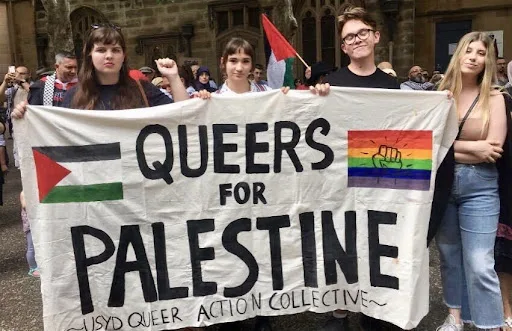
It’s almost laughable how many people—especially Western liberals, celebrities, and even the LGBTQ+ community—have thrown their support behind Palestine without realizing that, under Hamas and other Islamist regimes, they themselves would be persecuted. And yet, they stand with a system that would never stand with them.

Even independent voices I once respected, like Candace Owens, jumped onto the “genocide” narrative without fully acknowledging how this all started. Yes, civilian deaths are tragic, but ignoring who fired the first shot and why makes the conversation one-sided.


Islam, Women, and a Hard Truth


Another thing that gets buried under political correctness is the reality of life for women in Islamic countries. My Somali friends, for example, get to enjoy freedoms that women in strict Muslim nations could never dream of. They can wear colorful clothes, show their necks, talk to boys, pursue careers. But when I ask them about the struggles of their fellow Muslim women abroad, they either stay silent or act as if it doesn’t exist.

And yet, we know the truth. In places like Iran, women are arrested—or worsefor removing their hijabs. In Afghanistan, girls are banned from schools. In Saudi Arabia, a woman’s testimony in court is worth half that of a man’s. These are not just “different cultural practices.” This is oppression.

And what frustrates me most? When non-Muslims visit these countries, we have to follow their laws—cover up, obey the rules, pay heavy fines. But when Muslim immigrants move to non-Muslim countries, they demand the right to practice their religion freely. Why is it that tolerance only goes one way? 


Wrapping It Up

I’ve had enough of the selective outrage. Enough of the hypocrisy. Enough of people blindly supporting causes without questioning the full picture.

Yes, war is tragic. Yes, innocent lives matter. But until people start looking beyond headlines and actually thinking for themselves, history will continue to repeat itself.

The question is—who is really free, and who is still trapped?

Disclaimer:
All the images in this blog are used for educational purposes only.

Saturday, March 1, 2025

Lagos 🇳🇬 Meets Kinshasa 🇨🇩

"When Lagos Met Kinshasa"

Opening Scene: A Chance Encounter

Jide never believed in fate, but when he missed his flight from Lagos to Johannesburg and had to take a last-minute connection through Kinshasa, he wondered if the universe had other plans.

He was in the airport lounge, sipping strong coffee, when he noticed her.

She walked with quiet confidence—shoulders back, head high, wrapped in a deep blue Maputa dress that complimented her dark skin. A Congolese beauty, no doubt.

She caught him staring and raised an eyebrow. Bold man.

Rising Action: Two Worlds, One Conversation

"Excuse me," Jide said, approaching her. "I’m new here". What’s the best thing to eat in Kinshasa?"

She smirked. "That depends. Do you like spice, or do you like to pretend you can handle it?"

He laughed. "Try me."

"Then pondu and fufu," she said. "But if you struggle, don’t blame me."

They sat together at a small airport café, talking between bites. He told her about his business in Lagos; she told him about her dream of opening a Congolese-inspired fashion line.

Their conversation was effortless—flowing like the Congo River, deep and uncharted.

Climax: The Flight That Changed Everything

As the boarding announcement for Johannesburg echoed, Jide hesitated. He had never believed in love at first sight, but this felt… different.

"You ever been to Lagos?" he asked.

She shook her head. "Not yet."

He grinned. "Then maybe we should fix that."

She laughed, but something in his eyes made her pause. "You Nigerian men… always so confident."

"Only when we see something worth chasing."

Resolution: A Beginning, Not an End

She gave him her number. He gave her a reason to believe in the unexpected.

As they parted ways, neither knew what the future held.

But one thing was certain—this was only the beginning.😁

Friday, February 28, 2025

Why Young People Are Losing Interest in Politics (And Why It Matters)


Why Young People Are Losing Interest in Politics (And Why It Matters)


I’ve always loved politics—debates, news, all of it. Even though I don’t watch everything or remember every detail, I genuinely enjoy it. But debating? That’s another story. I’ve never been good at it. The moment someone throws a "gotcha" at me, my mind either goes blank, or I forget an important fact I needed to back up my point. That’s why I don’t debate. And honestly, I wish the high schools I attended had debate clubs. Maybe if I had that opportunity, I would have mastered the skill. But here I am, just watching from the sidelines, wondering why so many young people don’t even bother with politics anymore.

Why Are Young People Losing Interest in Politics?

1. The Distraction of Social Media
TikTok, Instagram, and other platforms have completely shifted how young people engage with the world. Instead of discussing policies, governance, or the future of our countries, people are obsessed with trends—learning the latest dances, following influencers who preach independence but lack wisdom, and consuming content that promotes superficial values. Social media has become a place where young men are encouraged to be weak, young women are encouraged to be overly hardened, and where critical thinking is slowly fading away. Instead of shaping a generation that questions, challenges, and changes the system, social media is raising a generation that is entertained but uninformed.


2. The Stigma Around Politics
Every time I mention that I might want to be a politician one day, people immediately assume I’ll become a liar, a fraud, or a dictator. Politics has become synonymous with corruption, deceit, and power-hungry leaders who care more about themselves than their people. So why would young people want to enter a space that seems rigged from the start? No one wants to be labeled as a crook before they’ve even begun.


3. Politics Doesn’t Feel Personal
Let’s be honest—most political discussions sound boring. They’re filled with complex terms, long speeches, and people in suits arguing over things that seem to have nothing to do with the average 19-year-old’s life. The youth care about jobs, money, their future, and social issues, but politics rarely speaks their language. So instead of engaging, they just disconnect.


4. It’s Just Not Cool Anymore
Back in the day, young people used to be at the front of revolutions, leading protests, demanding change. Today, most youth would rather go viral than go vote. Political involvement isn’t seen as exciting; it’s seen as stressful and irrelevant. And because of that, we are losing our power without even realizing it.


Why Youth Participation in Politics is Crucial

1. Because the Future Belongs to Us
Whether we like it or not, the decisions being made today will affect us for decades. If we don’t participate, older politicians will keep making policies that don’t reflect our needs. If we want a future that benefits us, we need to be part of shaping it.


2. Because If We Don’t Speak, Others Will Speak For Us
The people in power today won’t always have young people’s best interests at heart. If we don’t get involved, others will make decisions that impact us without our input. Then we’ll wake up one day complaining about laws and systems we never even tried to challenge or change.


3. Because Politics Shapes Everything
Whether it’s education, job opportunities, social issues, or even social media laws—politics touches everything. Ignoring it doesn’t make it disappear; it just means we’re allowing others to decide our fate.


Final Thoughts

I get it—politics feels messy, fake, and exhausting. But if we all check out, who’s going to fix the system? Who’s going to stand up for what’s right? We don’t have to be perfect debaters, and we don’t have to know every single political fact. But we do have to care. Because if we don’t, we’ll wake up one day in a world that we had the power to change—but didn’t.

What do you think? Do you feel like young people are disengaged from politics? Or do you see signs that things might be changing? Let’s talk about it.👇🏿


Disclaimer: 
I do not own any of these pictures displayed on this blog. It is only used for educational purposes.


The Deadly Price of Perfection: Elena Jessica’s BBL Story You Can’t Ignore

WHEN BEAUTY GOES WRONG: THE SAD, SAD BBL STORY YOU NEED TO HEAR Hey Dreamers 👋🏿, listen. I need you to hear this because this ...

Popular Posts