Sunday, June 15, 2025

Dear Father: A Love Letter to the Complicated Ones

Dear Father: A Love Letter to the Complicated Ones


Ah, Father’s Day. The one day in the year where barbecues are burned, socks are gifted, and sermons are sprinkled with “men must lead” clichés. A day wrapped in neckties and uncomfortable silences. It’s weird. It’s cringe. It’s complex. It’s real life.

Let’s be honest — Father’s Day doesn’t hit the same for everyone.

In my world, it’s rarely celebrated unless the men at church take initiative to plan something… for themselves. Yes. For themselves. With a little help from their wives and kids. Because of course — even when it’s “Men Only,” women still do the behind-the-scenes magic. And the teen girls from youth? Always pulled in to create cute cards, organize a breakfast, or rehearse a dance number that makes the men in suits smile awkwardly and say, “Ah, thank you, thank you.”


Then there’s the church prayer version — the short, generic “May the Lord bless the fathers” prayer from the pastor, followed by a congregational murmur of "Amen," and we move on to the offering. That’s it. Happy Father’s Day. Now turn to 2 Samuel.

But beyond the awkward group photos and the post-service tea and biscuits, let’s talk about fathers — and I mean all kinds.

Because “father” isn’t just a title you inherit from DNA. It’s a complicated relationship, a mirror, a scar, a blessing, a mystery, and sometimes… a ghost.

1. To the Great Fathers

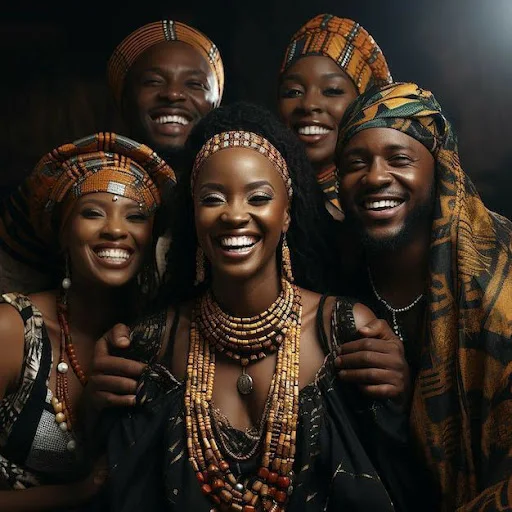
You showed up. You stayed. You provided, not just materially, but emotionally. You learned to say “I love you” even when it wasn’t said to you growing up. You drove us to school, taught us how to fix things (or at least how to Google it), made dad jokes that we rolled our eyes at — but secretly loved. You were present, even when you were tired. To you: Thank you. We celebrate you loudly today.

2. To the Absent Fathers

Maybe you left. Maybe you stayed but emotionally clocked out. Maybe your shadow has been louder than your presence. You taught us something, too — about healing, boundaries, and self-worth. Sometimes, your absence forced us to become strong before we were ready. That pain? It grew resilience. We don't have to glorify it, but we can acknowledge it. And still rise.

3. To the Deadbeat Dads

Yeah, we said it. You dipped. You disappeared. You made excuses. You made promises you never planned to keep. This is not a cancellation. This is an accountability memo. You still matter — but we need more than just your name on a birth certificate. We need your effort, not your ego. It’s not too late, but it has to start with truth.

4. To the Surrogate Fathers

The uncles, big brothers, pastors, teachers, mentors, stepdads, neighbors, coaches — the men who stood in the gap. Who showed up at prize-giving ceremonies, taught us how to ride bikes, gave advice (even when we didn’t want it), and told us to get home before the streetlights. You might not carry our last name, but you helped carry our lives. You are loved. Deeply.

5. To the Complicated Fathers

You're here… but it’s complicated. Maybe you don’t say much. Maybe you struggle to connect. Maybe you're better at building things than expressing emotions. Maybe our relationship is defined by respect more than love. And maybe that’s okay — for now. This is a space for you too. Because real fatherhood doesn’t come in perfect packaging.

6. To the Grieving Ones

You lost your father. Or your child lost theirs. Or you never knew yours. Father’s Day can feel like a wound wrapped in ribbons. It’s okay to cry. It’s okay to laugh at an old memory. It’s okay to say nothing at all. Grief has no schedule. Let today be what it needs to be.


My Story?

Well, my father and I… we’re not that close. He’s just my father. And I’m just his daughter. We’re civil. We coexist. There’s no drama, but also no depth. It’s a quiet bond, maybe built more on blood than shared dreams. And you know what? That’s my story. That’s my life. That’s valid too.


So wherever you find yourself today — whether you’re celebrating, remembering, mourning, or questioning — this day is still yours. It’s a Father’s Day for everyone.

Because fatherhood is not one shape. It’s a collage of impact. Some beautiful. Some broken. Some still in progress.

And maybe that’s what makes this day so important — not the perfection of fatherhood, but the power of its presence (or lack of it) in shaping us.

So, to all the fathers, and father-figures, and the people healing from them:

We see you. We honor your story. And we hold space for every version of “Dad.”


Disclaimer: Images used on this blog are for illustrative purposes only and remain the property of their respective owners. No copyright infringement is intended.

Thursday, June 12, 2025

Twerking for Jesus? BET Just Crossed the Line

When the Gospel Goes Shirtless: BET Awards, Black Culture, and the Blurred Lines of 2025

I didn’t watch the 2025 BET Awards. But like many people, I didn’t have to. The scenes made their way across social media faster than a pastor dodging accountability. Within minutes, my timeline was flooded with sequins, smoke machines, slow-mo hips, and what I can only describe as Babylon's VIP lounge with a gospel remix.

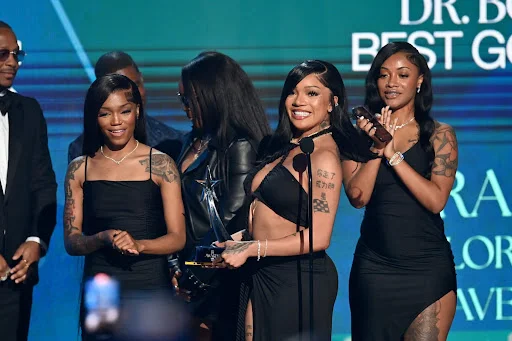
Somewhere in that mess, GloRilla won a gospel award. Yes, that GloRilla. The same artist who’s made a career off lyrics that sound more like nightclub affirmations than worship. One minute she’s twerking on TikTok, the next she’s winning a gospel category. You can't make this stuff up.

And then there was Kirk Franklin. A legend in gospel music. A man many of us grew up watching praise God in suits, with choirs in full harmony. But last night, he looked like he had just finished rehearsing for Magic Mike: Sanctified Edition. Shirtless. Dancing. Sweating. And all I could think was: Is this praise or performance? Revival or rave?

This wasn’t just an award show. It was a blur. A messy, hyper-produced spectacle pretending to celebrate Black excellence while actually highlighting how deeply confused our cultural compass has become.

GloRilla, But Make It Gospel?

Let’s be real. GloRilla is not a gospel artist nor a Christian. That’s not shade—that’s just truth. She might have done a gospel collab, might have referenced God in a line or two, but gospel music is not just about lyrical cameos. It’s about the lifestyle, the message, and the fruit. You don’t suddenly become a gospel artist because you dipped one toe into the Jordan River for 3 minutes.

Giving her a gospel award is like giving a surgeon's license to someone because they once held a thermometer.

Kirk Franklin’s Abs and the Absence of Standards

Listen, I respect Kirk. He’s done more for gospel than most will ever know. But even OGs can lose the plot. There’s a fine line between relevant and reckless. And last night? He wasn’t walking that line—he was dancing shirtless across it.

It wasn’t just the performance. It was what it represented: the need to entertain over the need to edify. There was no boundary between the sacred and the secular. Just a flashing neon sign that read: "Welcome to the confusion."

Dear Christian Podcasters: Stop Reacting. Start Redirecting.

Every time something like this happens, Christian YouTubers and podcasters flood the internet with reaction videos, hot takes, and thumbnail faces of spiritual disappointment. And while I get it—sometimes you have to speak up—let’s be honest: you’re also giving it more traction.

These awards feed off attention, even the angry kind. Every time you break it down frame-by-frame, all you’re doing is sending more clicks their way. They don’t care why you watched—just that you did.

Instead, why not redirect people to real gospel? Promote music, ministries, and voices that still honor the cross without trying to crucify conviction. Let's be builders, not just critics.

It’s Not Judgment. It’s Discernment.

Some will say, "Stop judging. You're being religious." But here's the truth: Discernment is not judgment. It’s protection.

When the culture celebrates confusion and crowns compromise, the Church must be louder about truth than the world is about hype. We can love people and still call out the madness. We must draw lines. Because if we don’t, we’ll wake up one day and not recognize the faith we claimed to follow.

Final Word: When Culture Becomes Confusion

If this is what we’re calling "Black culture" now, then some of us need to start redefining our roots. I thank God I’m not African American sometimes—not out of pride, but because this version of cultural celebration feels more like spiritual erosion.

BET doesn’t define us. Culture doesn’t validate us. Christ does. And the moment we forget that, we trade gold for glitter.

If you’re tired of the blur, walk away from the noise. Real gospel doesn’t need smoke machines, sex appeal, or shirtless saviors. It just needs truth.

Ephesians 5:11 says it best: "Have nothing to do with the fruitless deeds of darkness, but rather expose them."

Well... consider this blog my small flashlight in the fog.

Disclaimer: Images used on this blog are for illustrative purposes only and remain the property of their respective owners. No copyright infringement is intended.

Wednesday, June 11, 2025

This Ain’t Wakanda, Baby — Tell Africa’s Real Stories or Don’t Bother

If Disney and Hollywood can animate Polynesian islands and Day of the Dead fiestas with soul, why does Africa still get huts, spears, and glowing ancestors?


Let’s get this out the way: We are not mad that Moana was beautiful, or that Coco made us cry, or that Encanto had us singing about Bruno for six weeks straight. We’re not mad because when those movies came out, they did something stunning: they treated the cultures they represented with care. With nuance. With joy. They did the research, asked the right questions, included people from the actual communities, and translated cultural depth into visual magic.

But when it comes to Africa? Crickets. Worse than crickets — clichés.


Africa, According to Hollywood:


One giant jungle. One language. One culture. One elder with face paint and spiritual Bluetooth. One mysterious beat playing in the background. And absolutely zero WiFi.

We’re not kidding. When Africa is portrayed in mainstream Western media, we either get:

An unnamed country where everyone is either dancing, dying, or disappearing.

A man in a hut who somehow invents quantum technology because the ancestors whispered the code to him in a dream.

Or Wakanda. And listen, we get it — Wakanda was cool, futuristic, and clever design. But let’s be real: it was a fantasy. It wasn’t Kenya. It wasn’t Nigeria. It wasn’t South Africa. It wasn’t Congo. It wasn’t any real place that actually exists.


And yet that’s the closest we’ve gotten to a "celebration" of African culture in big-budget cinema.


Meanwhile, in Real Africa:


People speak over 2,000 languages. They wear vibrant traditional clothing that shifts by tribe, occasion, and history. They eat food that would knock your tastebuds into next week. They make music that TikTok can’t even keep up with. The dance styles? Let’s not even go there unless you’re ready to sweat.

From the spiritual dances of Ethiopia to the ngoma of Tanzania, from the gqom beats of Durban to Congolese rumba and Lingala swagger, from the intricate Zulu beadwork to the Sapeurs of Brazzaville serving luxury fashion in the middle of economic struggle — there’s so much to say.


And yet... we get hunting, huts, and hallucinations. Every. Time.


So, What’s Really Going On?


Is it laziness? Is it ignorance? Is it because Africa is still seen as one big symbolic prop, rather than a continent made up of 54 countries and more culture than some people have WiFi passwords?

Let’s be fair — not every film has to include Africa. But if you’re going to do it, do it right. Do your research. Pay African creators. Visit actual cities. Show the youth dancing to Amapiano in the street. Show aunties yelling over spice levels in the kitchen. Show elders telling stories that don’t involve saving the world with magic metal.


The World Is Ready. Are You?


We’ve seen Japanese, Mexican, Colombian, Scottish, Polynesian, and Chinese cultures get animated with heart and respect. We’ve cried, laughed, and sung along.

But Africa? Still treated like a spiritual side quest or a digital jungle gym.

It’s not about inclusion for the sake of ticking boxes. It’s about respect. If you’re not ready to show our diversity, our humor, our pain, our joy, our fashion, our food, our beats, our beauty — then maybe, don’t bother showing us at all.

Because honestly?

We’re not just tired. We’re offended.

Tell Africa’s stories. For real this time.


Disclaimer: Images used on this blog are for illustrative purposes only and remain the property of their respective owners. No copyright infringement is intended.


© 2025 The Dreamer’s Pause. All rights reserved.

Tuesday, June 10, 2025

Foreigners Are Not the Problem. But Are We Doing Enough to Prove That?

Foreigners Are Not the Problem. But Are We Doing Enough to Prove That?


By Lili Phedra

There’s a quiet war happening on South African soil — and it’s not fought with guns or grenades.
It’s fought with glances.
With policies.
With comments under Facebook posts that laugh at the dead and mock the desperate.
And those on the frontlines? Foreign nationals — caught between belonging and exclusion, between survival and silence.

This war didn’t start yesterday. But it’s evolving. And the truth is: we can no longer pretend we’re not part of it.


We’re Dying in Silence — and No One Seems to Notice

In recent weeks, more lives have been lost. Foreign lives. Black bodies. Names buried beneath hashtags and headlines that never came.

Some died while running businesses. Others while trying to find shelter. Some were attacked simply for looking like they didn’t belong.

Yet there was barely a whisper.
No candlelight vigils.
No outcry from national leaders.
Only laughing emojis on social media.
And this haunting phrase:

> “Probably Nigerian. Or Zimbabwean. Or Congolese.”


This isn't just xenophobia.
It's cruelty.
And it’s being normalized.


But Before We Point Fingers, We Have to Be Honest With Ourselves

Let me speak to my fellow foreigners — especially those who, like me, call this country home or were born here.

We’ve become experts at survival. We hustle. We adapt. We keep our heads down. But in that silence, something has broken.

There are people who’ve lived in South Africa for six, even ten years, still undocumented. Some have fake documents. Others haven’t even tried to regularize their stay.

We say the system is broken — and it is.
But let’s be honest: so is our commitment to doing better.

Because when you refuse to legalize your stay, when you fake IDs or ignore paperwork, you don’t just risk your own future — you put the entire community at risk.


We’ve Allowed Ourselves to Blend into the Shadows

We don’t talk about rights. We don’t stand up when we’re wronged. We avoid hospitals and police stations out of fear. And now, when injustice happens, no one notices.

Why?
Because the world assumes we have no voice.
And sometimes, it feels like we’ve accepted that too.


South Africa Is Not Innocent Either


Now, let’s be clear. This is not just a foreigner problem.

It is not normal for someone to walk into a hospital bleeding, only to be told, “Go back to your country.”
It is not acceptable for children born in South Africa to be treated like illegal strangers.
It is not legal for police to demand bribes from immigrants just trying to walk home from work.

This is not about immigration control.
This is about dignity.
And when you strip one group of dignity, the whole nation suffers.


We’re Convenient to Hate — But Essential to the Economy

You hate foreigners selling in townships.
But they’re the reason you can buy sugar at 10 p.m.

You protest against Congolese salons.
But they’re the ones keeping your braids fresh.

You say Zimbabweans are taking your jobs.
But when your pipes burst or you need your driveway paved, guess who you call first?

We are hated publicly. But needed privately.
And that contradiction is killing us — sometimes literally.


Borders Are Broken, but So Is the Narrative


People ask how foreigners got here in the first place.
Let me answer that: legally.
Most of us came through airports. Borders. Visa checkpoints. We were stamped in by immigration officers, allowed in by systems that smiled at us at the front gate — and ignored us ever since.

Now we’re blamed for the state of the economy, the job market, the crime rate.
But who failed to follow up?
Who looked the other way?
Who benefits from keeping us invisible?


To Foreigners: This Is a Wake-Up Call


The truth is hard to swallow, but it must be said.

If you’ve been here for years without documentation, it’s time to stop hiding behind excuses.
If your children are undocumented, start the process — even if it’s slow.
If you’ve been silent about injustice, it’s time to speak.

Not because South Africa owes us anything.
But because we owe ourselves the right to live with pride, not fear.


To South Africans: Don’t Let Hatred Speak Louder Than Humanity

Not everyone is xenophobic. I’ve met South Africans who stand up, speak out, and defend truth when it matters most.
But those voices are being drowned out.
By TikTok lives that mock migrants.
By politicians who thrive on fear.
By silence that looks a lot like consent.

We need you.
Because this fight isn’t just about us.
It’s about the kind of South Africa you want to live in.


Conclusion: The Mirror Doesn’t Lie

We can’t fix what we won’t face.
Foreigners are not the enemy — and neither are South Africans.
But there’s a dangerous silence swallowing both.

If we want a future here — one that includes peace, safety, and dignity — then the work starts with us.
With truth.
With paperwork.
With protest.
With prayer.
With real conversations that go beyond who belongs and who doesn’t.

Because in the end, we’re already building this country — whether anyone wants to admit it or not.

So let’s build it with honesty.
Let’s build it with courage.
Let’s build it.

The Deadly Price of Perfection: Elena Jessica’s BBL Story You Can’t Ignore

WHEN BEAUTY GOES WRONG: THE SAD, SAD BBL STORY YOU NEED TO HEAR Hey Dreamers 👋🏿, listen. I need you to hear this because this ...

Popular Posts