Wednesday, May 28, 2025

Freedom of Speech or Shield of Hypocrisy? The Mohamed Hijab Dilemma

Let’s Be Honest: Why Is Mohamed Hijab Still Getting Away With This?


By Lilo Phedra 

Let me say this upfront — this is not a personal attack. This is not an emotional rant. This is a call for honesty, accountability, and consistency. Especially when it comes to public figures like Mohamed Hijab.

For years, this man has been active online—on Twitter, YouTube, public debates—saying and doing things that, frankly, most people would’ve been cancelled for a long time ago. But somehow, he keeps getting a pass. Why?


His Tweets Alone Should’ve Been Enough

Let’s not pretend we don’t know what I’m talking about. You’ve seen the tweets. He’s tweeted vulgar, sexually explicit insults about people’s wives, mothers, and families—especially aimed at Christians and ex-Muslims.

> "Tell your wife to stop messaging me"
"Your mother too"
(These are not jokes. They were public tweets that went viral and shocked many.)


If any Christian public figure had said something like that about Muslims or their families? Game over. They’d be called hateful, Islamophobic, reported, probably de-platformed. And maybe rightly so — because there should be consequences for that kind of behavior.

So why not him?


 He’s Not Debating — He’s Bulldozing

If you’ve watched his debates (and trust me, I’ve watched more than enough), you’ll notice a pattern:

Interrupting constantly

Shouting down his opponents

Throwing in jokes and insults instead of actual counterarguments


This is not how respectful religious dialogue is done. Whether he’s debating David Wood, Apostate Prophet, or anyone else, his tone is aggressive, not persuasive.

You can disagree all you want with Christianity, ex-Muslims, or atheists — that’s your right. But dragging people’s families into the conversation? That’s not debating. That’s straight up bullying.


The Irony of "Free Speech"
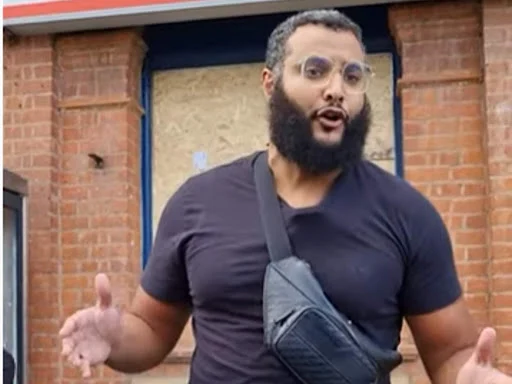
Now, here’s the irony. Hijab always shouts "freedom of speech" when he wants to say something controversial. But when someone questions the Quran or talks about what it says about non-Muslims, suddenly they’re “Islamophobic,” “disrespectful,” or “provoking violence.”

So let me get this straight: He can say whatever he wants — no matter how vulgar — but when someone disagrees with Islam publicly, they must stay silent or risk backlash?

No. That’s not free speech. That’s selective freedom. And it’s very clear.


Why Hasn’t He Been Banned or Arrested?

This part confuses many of us. Hijab doesn’t live in a strict Muslim country — clearly. Because if he did, I don’t think he’d dare say or did half of the things he says and do online.

And yet, he's not banned from platforms like X (Twitter), YouTube, or even demonetized like others have been for far less. Why? Is it because of his popularity? Or fear of being accused of Islamophobia?

If a Christian influencer made constant threats, insults, and religious mockery at this level, they’d be all over the news, probably doxxed, maybe even arrested in some places. But for Hijab? Silence.🤐

That’s not justice. That’s selective outrage.


Real People Have Called This Out — Even Muslims

This isn’t just me talking. Plenty of people — including ex-Muslims, Christian apologists, and even some concerned Muslim viewers — have spoken up:

David Wood: “Hijab lost the debate the moment he brought up my wife. That’s not apologetics.”

Apostate Prophet: “Hijab is obsessed with intimidation, not truth. His threats aren’t even hidden.”

Random ex-Muslim on Reddit: “I left Islam in part because of how aggressive people like Hijab were. It didn’t feel like peace — it felt like control.”


So What Is His Real Agenda?

Many of us genuinely wonder: If he’s happy in non-Muslim countries, why does he still carry so much anger toward non-Muslims?

Some say, “Oh, he’s just defending Islam.” But if your method of defense involves insults, threats, and bragging about Shari’a law in secular countries — is that really defense or is it a soft push for something else?

And if the Quran does say problematic things about how to treat non-Muslims (and yes, there are verses that raise eyebrows), is it wrong to ask questions about that?


Final Thoughts: Enough Is Enough

This blog is not about hate. It’s about calling out double standards. It’s about asking: why are some people allowed to break the rules while others get cancelled for having respectful conversations?

If Mohamed Hijab wants to be a public figure, a voice for Islam, then he needs to act like one. That means apologizing for vulgar posts. That means respecting his debate opponents. That means accepting that criticism is part of public life — even if it’s about Islam.

Because if we’re going to talk about peace, respect, and truth, then those values must be shown, not just preached.


💬 Got a Story? Drop it in the Comments.

Whether you’re Muslim, Christian, atheist, or just curious, I invite you to share your thoughts — respectfully. Let’s have a real conversation. No threats. No insults. Just truth.


Disclaimer: Images used on this blog are for illustrative purposes only and remain the property of their respective owners. No copyright infringement is intended.

She Went on a Date and Never Came Back

What Are We Not Seeing?


Every day—yes, every single day—there’s a story of a woman killed. Sometimes by a man she trusted. Sometimes by a man she just met. Sometimes by a man she never even had the chance to run from. And every day, the reasons get more senseless. Cheating. Rejection. Misunderstanding. Or no reason at all.

And you want to ask: What is actually going on?

This is not a horror movie. This is not one country’s problem. This is a global crisis, but it’s also the new normal. If you scroll through your social media, turn on your news, or walk into a conversation with women today, someone is grieving. Someone is scared. And someone is asking the same question I’m asking:

What are we not seeing?

Because it’s not just about bad luck. It’s not just “the wrong guy.” It’s not just dating apps or social media. It’s not just rituals or revenge or mental health. It’s something deeper. Something dangerous. Something that has already gotten out of control.

Let’s face this head-on.


It's Not Just Fear Anymore. It's a Pattern.

We can’t pretend anymore. Every week, the same headlines. “She went on a date.” “She met him through a friend.” “They argued.” “She never came home.” And somehow, we keep being shocked—even though it’s now routine.

We can’t say we didn’t see the signs. The signs are all around us:

Men bringing weapons on dates.

Women disappearing in familiar places.

Girls being buried while still called "missing."


You think you're safe because you met him through family? Or because you prayed hard enough? Or because he goes to church? We’ve seen cases that prove otherwise. So really—what is the guarantee anymore?


"Not All Men" But... Why So Many?

Yes, not all men are violent. But women are dying every day because of men.

And let’s not twist this into a debate about who’s worse. The statistics speak for themselves. The media shows it every day. Women are dying at the hands of men, often for reasons that make no sense.

Cheating is not an excuse. Disrespect is not a reason. Rejection is not a death sentence. And yet... women are being slaughtered, dismembered, buried, erased.

The question we must ask isn’t “Why?” anymore.
It’s “Why still?”


What’s the Real Solution?

That’s the hard part. Everyone marches. We post hashtags. We light candles. We share their names. But the killings continue. So again, I ask:

What are we not seeing?

Maybe the real issue isn’t just with strangers. Maybe it’s in our systems, our silence, our normalization of control over women or something spiritual. Maybe it’s in how we raise boys to believe a woman’s “no” means “convince me.” Maybe it’s in the justice systems that turn a blind eye—or in religious spaces that teach women to endure instead of escape.

Yes, we pray. Yes, we try to be careful. But is it enough?


For the Parents, the Brothers, the Pastors, the Teachers

If you love a girl child, this matters to you.

Don’t wait for the violence to reach your doorstep before you care. Because by then, it’s too late. These girls were loved by someone. They had dreams. They had people waiting for them to come home.

Whether you’re a father, a brother, a leader, or just someone who thinks this is "not your problem"—this is your problem. Start talking. Start protecting. Start educating.

Because tomorrow, it could be someone you love. God forbids!


This is Not a Trend. This is Terror.

We need to stop acting like this is just another cycle in the news. This is not a trend. It’s not content. It’s not awareness week. It’s terror. It’s real, and it’s here, and it’s daily.

Let’s be honest: women are not overreacting. We are under-protected.

So the question remains:
What are we not seeing?
And how many more women need to die before we finally open our eyes?


Monday, May 26, 2025

The Glitter and the Grown-Ups: Miss Shirley’s (LaR'iyah Jesireé) Rise and the Restless Questions

The Concern Isn’t Jealousy – It’s Protection | Part 2


There’s been a lot of noise surrounding the rising internet star, Miss Shirley (LaR'iyah Jesireé). I’ve watched the videos, read the comments, and now even seen a response from her mother. It’s clear that emotions are high—and understandably so. But let me make one thing very clear, not all of us voicing our concerns are doing so out of jealousy.

Some of us are genuinely worried.

Miss Shirley is an undeniably gifted and beautiful child. Her confidence, charm, and talent can light up a screen. I want her to shine. I truly do. But it’s difficult to ignore the growing discomfort many of us—especially the so-called “social media aunties and big sisters”—are starting to feel.

This little girl is being pushed too far, too fast.

We’ve gone from innocent dance videos to full-on adult performances. Not just fun, child-friendly shows—no, we’re talking clubs, lap-sitting, and adult audiences. That’s not just “going viral.” That’s crossing a line.

What began as a moment of celebration is now teetering dangerously close to exploitation.

Her mother’s video response, though passionate, did little to ease concerns. Between the strong accent and the defensive tone, the message felt more like a rant than a reflection. I’m not here to judge her dialect—I understand that every voice deserves to be heard—but communication is key when you’re addressing a wide and diverse audience. Especially when the topic is this sensitive.

The real issue here isn’t "haters" or "jealous people." It’s about boundaries, safety, and childhood. And yes, the questions are valid: Why is a four-year-old performing in adult spaces? Where is the father figure? Is this truly about nurturing talent, or is this about monetising a child’s popularity?

Let’s be honest: when rumors surface about a mother having an OnlyFans account, when Child Protective Services show up, when a child is performing in clubs—those are red flags.🚩 Whether the claims are true or not, the fact that these conversations are even happening says a lot about how far the situation has spiraled.

And while some may argue that a stranger called CPS, my instinct—and I say this respectfully—tells me it was someone closer. Someone in the family. Why? Because often, the people who make the hardest calls are the ones who care but are afraid to speak openly.

Now, before assumptions take over: I’m not against single mothers. Many of them raise incredible children with grace and strength. But being a parent—single or not—requires constant self-checking. When a child becomes a brand, it’s easy to blur the lines between parenting and promotion.

And those lines are already fading.

I’m not writing this to shame anyone. I’m writing this as someone who values the wellbeing of children, especially young girls, who are so often adultified and pushed into roles they’re not ready for. Miss Shirley deserves a childhood. She deserves joy, safety, and protection—not just a spotlight.

So, to the mother: take a breath. Step back. Listen to the voices that aren’t attacking, but asking. Not everyone is out to bring you down. Some of us just want to make sure this bright little light isn’t being dimmed by the shadows of adult decisions.

Let this be the pause before things go too far. Because we all want the same thing—for Miss Shirley to thrive. But let’s not forget, thriving isn’t just about fame—it’s about being safe, whole, and protected.

That’s what real support looks like. 👌🏿💯


Disclaimer: Images used on this blog are for illustrative purposes only and remain the property of their respective owners. No copyright infringement is intended.

In Memory of Ama Endorsed – A Star Dimmed Too Soon

In Memory of Ama Endorsed – A Star Dimmed Too Soon


Introduction: Ama Endorsed was more than a Ghanaian entrepreneur—she was a force. A young woman who defied societal expectations by mastering carpentry, founding Namas Decor and Namas Autos, and inspiring thousands through her fearless pursuit of success. She was only 29, and already a beacon for many young Africans. Her passing in April 2025 has left an echo of pain, not only in her country but across social media and hearts around the world.

A Legacy of Talent and Tenacity: Ama’s rise was not luck—it was skill, purpose, and boldness. In a male-dominated industry, she carved her space with elegance and power. Her social media pages were filled with her projects, her laughter, her light. To open a showroom at such a young age is no small feat. It’s excellence.


The Darkness Behind Smiles: Though the official cause of death remains unconfirmed, online whispers of poisoning at the hands of a “friend” are what shook people most. Whether true or not, the rumor forces us to confront an uncomfortable truth—jealousy can live next to you. It can wear the face of a friend. This is not just about Ama. It’s about the many others who trusted too deeply and paid a heavy price.

Reflections on Friendship and Boundaries: This tragedy brings up a difficult question: is it better to walk alone than to walk with people who secretly hope you’ll fail? Not all friendships are dangerous, but not all friendships are safe either. In my own blog, I’ve shared stories of betrayal. While not as tragic as Ama’s, they’ve taught me the same lesson—trust is precious. Boundaries are necessary. And discernment is survival.

You don’t need enemies when fake friends can do worse. Laugh with people, talk with them—but don’t invite everyone into your inner world. You can love people without letting them into your secrets. Not every “friend” deserves a seat at your table.

A Final Goodbye: I saw the man cry at her funeral. Real tears. Ugly tears. That kind of sorrow doesn’t lie. Ama Endorsed touched lives. Her loss cut deep. We may never know the full story, but we know she lived with purpose and left behind a standard. May her soul rest in perfect peace. May her story never be forgotten.🕊️

Is the DRC-US Mineral Deal a Step Forward or a Trap in Disguise?

Is the DRC-US Mineral Deal a Step Forward or a Trap in Disguise?


Lately, there has been a lot of talk about the Democratic Republic of Congo (DRC) getting closer to signing a deal with the United States. This agreement is focused on minerals and security. Basically, the U.S. wants access to our rich resources like cobalt, lithium, and other minerals that power electric cars, smartphones, and even renewable energy technologies. In return, they’re offering to help us with security issues in the eastern part of our country and to invest in infrastructure.

Now, on the surface, this sounds like a good thing. We get support to fight rebel groups like M23, improve transport systems, and create jobs. But here’s my concern—and I think a lot of young people like me are thinking the same thing: what happens when we want to be truly independent?

Let’s be honest. We’ve seen this story play out in other African countries. They accept deals with powerful nations, and in the beginning, things seem to be going well. There’s money, development, new roads, maybe even peace. But fast-forward a few years, and these same countries get hit with sanctions, political pressure, or worse, if they try to pull away or stand on their own feet. These big powers don’t just invest for charity—they want control, influence, and long-term access.

According to reports, the deal is set to be finalized around June 2025. U.S. companies will gain rights to mine and export minerals. In exchange, the U.S. will train our military, support our fight in the east, and work on trade routes like the Lobito Corridor. There are promises about transparency, protecting workers, and respecting the environment—but how much of that actually happens on the ground?

I’m not saying we don’t need partnerships. We do. But let’s make sure it’s a partnership, not a dependency. We must think long-term. Will this deal help us become stronger and more self-reliant as a country—or will it tie us down to foreign powers again, just like in the past?

Some African countries are trying to move independently, and yes, it’s hard. Some face sanctions, some are isolated. But the goal is freedom. Full control of their land, their economy, and their future.

As  young Congolese citizens, we need to ask tough questions. Who benefits the most from this deal? What guarantees do we have that our people—not just foreign investors—will gain from our own minerals? And are we prepared for the long-term consequences if we ever want to walk away from the agreement?

This is a big decision. We shouldn’t rush into it just for short-term benefits. Minerals can build a future, but only if we stay in control of them. Let's be smart. Let's be awake. Let's not sell our future for temporary peace.

— A concerned Congolese youth🇨🇩

The Deadly Price of Perfection: Elena Jessica’s BBL Story You Can’t Ignore

WHEN BEAUTY GOES WRONG: THE SAD, SAD BBL STORY YOU NEED TO HEAR Hey Dreamers 👋🏿, listen. I need you to hear this because this ...

Popular Posts